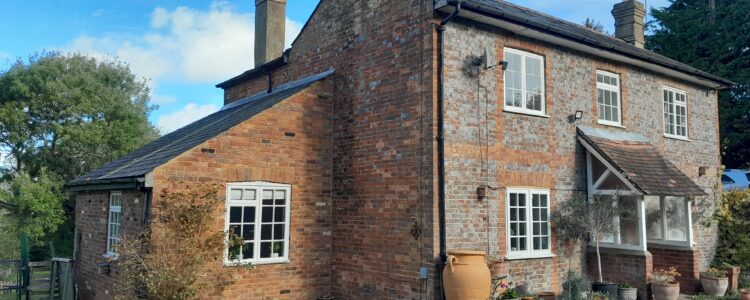
Fuller Long – HEA are delighted to have provided a robust Heritage Statement and subsequent appeal statement to support the demolition of a cottage that was identified as an NDHA during the application process. The dwelling in question had limited heritage value save for the main facade, having been substantially altered and rebuilt over the course of its lifetime. The Conservation Officer at Buckinghamshire Council designated the property as an NDHA without visiting the site and based upon limited information. In recent years, homeowners and businesses often find their building designated as an NDHA during the course of planning applications without proper procedure or sufficient justification. This designation imposes additional planning constraints with no option for appeal. We believe this arbitrary process is unfair and frequently unwarranted.
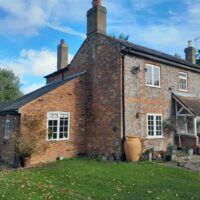
In this instance, the owner of a cottage, which had recently been granted permission for a large extension without comment from the Conservation Officer, was refused permission to re-develop as it was identified as a non-designated heritage asset (NDHA). The Council further indicated that it intended to formally add the building to their Local List. The client wished to replace the cottage, which was poorly laid out, cold and damp, with a contemporary, energy-efficient and sustainable family home that was of a similar footprint to the existing building and of a high quality design.
The existing building is a modest farm labourer’s cottage with an attractive frontage, which was likely constructed in the late 19th century to serve a neighbouring estate. The property had been significantly altered over the course of its history, with the result that almost all of the historic features, as well as the plan form, had been lost. In addition, the windows were all 20th century replacements, the sides and rear had been extended and the roof had been retiled, so in essence, the only physical feature to be of sufficient interest to be considered relevant to the Local Authority’s criteria was the brickwork of the main facade. With this in mind, the replacement dwelling was of an appropriate design; reinstating the front facade so as to retain the character of the cottage whilst providing a family home with a substantially improved energy rating and lower bills.
Fuller Long provided a Heritage Statement to accompany a revised application which assessed the heritage significance of the building and went on to provide sufficient justification to demerit the building as an NDHA according to criteria established by Buckinghamshire Council. Our report ultimately concluded that the application building did not reach the required standard for identification as an NDHA or inclusion on the Local List, taking into account the Council’s own criteria for selection.
Despite this evidence, Buckinghamshire Council refused the application, so the heritage team at Fuller Long subsequently provided a robust appeal statement for submission to the Planning Inspector. Both the National Planning Policy Guidance and Historic England’s advice are also clear that the identification of NDHAs should be based on clear evidence of sufficient detail and accuracy. In this case, there was no assessment of the significance of the building and its contribution to the character and appearance of the local area on record. The application building had not been identified during a process of engagement with the local community nor had its identification been subject to public consultation, whereby the applicant would have had the opportunity to respond to the nomination. Altogether, these factors reduced the weight which could be attributed to its identification as an NDHA.
Ultimately, the Planning Inspector agreed that the property did not have sufficient historic value to warrant an NDHA designation. As such, the appeal was upheld and the proposed demolition of the existing house was approved.
If you are a householder or developer concerned about a building or structure being identified as an NDHA, Fuller Long HEA can help. We offer a number of services including undertaking an assessment of buildings and sites in advance of planning applications or purchase to help determine the likelihood of an LPA identifying a property as an NDHA. If the site has limited historic interest, as was the case above, Heritage Statements can then be provided from the outset to demonstrate that the property should not be considered as an NDHA or be included on the council’s Local List. Please call us on 0808 164 1288 or send details of your project to hello@fullerlong.com.